

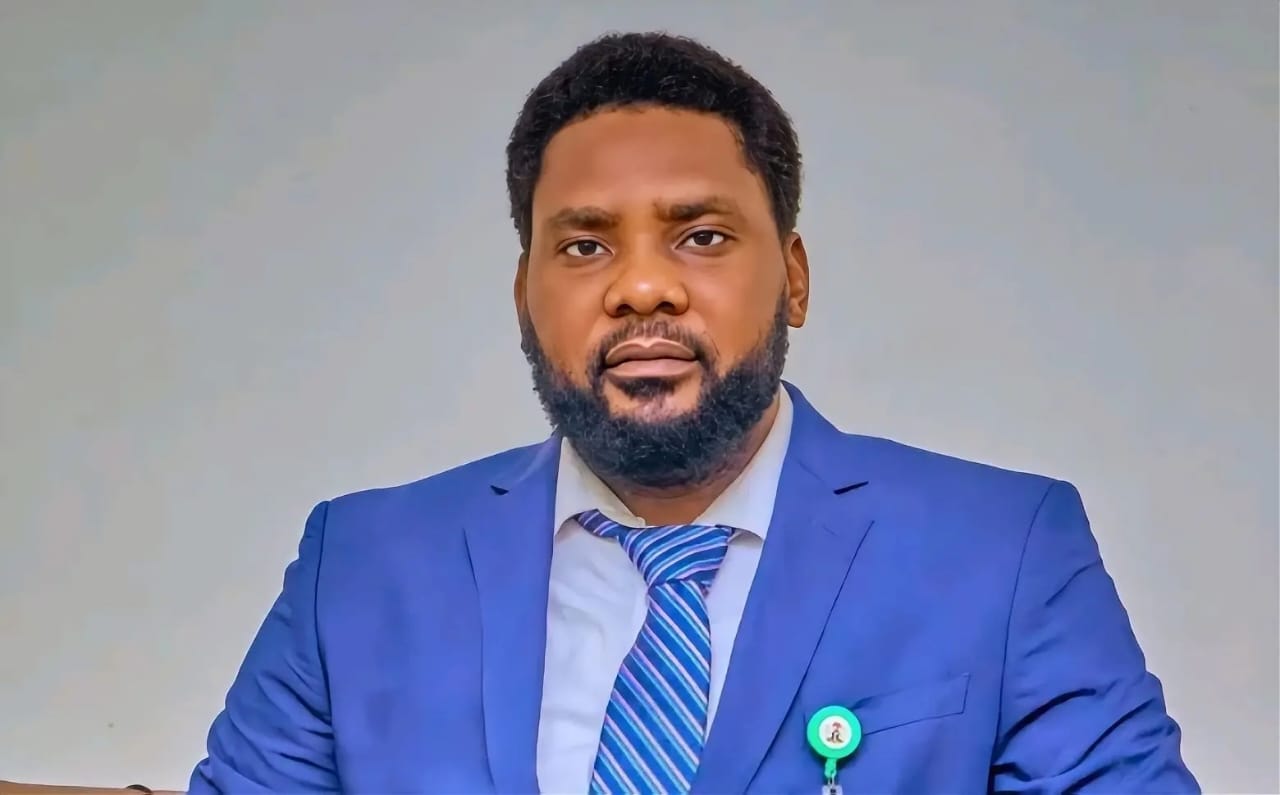
The new Nigeria Basketball Federation president inherits a divided basketball community after allegations of electoral manipulation, disputed state representation, candidate withdrawals and questions over constitutional compliance overshadowed the transition.
Olusola Adebayo examines the journey so far and battles ahead in a Sportsbeat.ng special
The emergence of Dr Mustapha Abdullahi as president of the Nigeria Basketball Federation (NBBF) was supposed to mark the beginning of a new chapter for Nigerian basketball. Instead, the October 15, 2026 elective congress in Abuja has opened another difficult conversation about electoral credibility, institutional accountability and the federation’s capacity to unite stakeholders behind a common vision.
Abdullahi, Director-General of the Energy Commission of Nigeria, secured 40 of the 48 votes cast to defeat former D’Tigers captain Olumide Oyedeji, who received eight votes. Former international Ejike Ugboaja received no votes, while Igoche Mark had withdrawn from the contest a day earlier, citing concerns about the fairness and credibility of the process.
The election, held at the Bola Ahmed Tinubu International Conference Centre in Abuja, ushered in a new administration for the 2026–2030 tenure, succeeding Musa Ahmadu Kida, who led the federation for eight years.
But beneath the announcement of the results lay a series of disputes that had gathered momentum in the weeks leading to the congress. Allegations over the composition of the electorate, the handling of candidates, the status of an international board representative and the legality of the electoral process had already placed the election under intense scrutiny.
The result has therefore settled one question: who will lead the NBBF for the next four years? It has not settled the broader argument over whether the process enjoyed the confidence of the basketball community.
From transition to controversy
The road to the October 15 election began with preparations for a change of leadership following Kida’s decision not to seek a third term.
The transition was also taking place against a deadline set by the International Basketball Federation (FIBA), which required the NBBF to complete its board election by October 15, 2026.
An extraordinary congress held in Yola, Adamawa State, on September 25 approved the election timetable and established a seven-member Electoral Committee chaired by Dr Lanre Glover, alongside a three-member Elections Appeals Committee.
The federation subsequently announced October 15 as the date for the election of a new executive board for the 2026–2030 term. The electoral framework was expected to provide an orderly transition in line with the federation’s governing provisions.
However, concerns about the process were already emerging before the final stages of candidate screening.
In September, retired Colonel Sam Ahmedu, president of FIBA Africa Zone 3, raised questions about the communication of electoral arrangements and the representation of key stakeholders. The international representative’s position on the incoming board would later become one of the most contentious issues surrounding the election.
The early concerns suggested that the challenge confronting the NBBF was not simply about choosing a successor to Kida. It was also about establishing confidence in the rules, procedures and representation underpinning the transition.
Candidate screening raises the stakes
The controversy intensified when the Electoral Committee announced its decisions on the presidential aspirants.
The candidates initially seeking the presidency included Abdullahi, Oyedeji, Mark, Ugboaja and former D’Tigers coach Ayo Bakare.
Bakare was disqualified after his nomination documents were reportedly submitted 12 minutes after the 2 p.m. deadline on October 8.
Mark was initially given additional time to submit an outstanding tax clearance certificate, while Abdullahi, Oyedeji and Ugboaja were cleared to contest.
The screening decisions generated further debate, particularly after the disqualification of Bakare became the subject of a court challenge.
For an electoral committee, applying deadlines and eligibility requirements consistently is fundamental to the credibility of an election. Equally important is ensuring that candidates understand the requirements and have access to the established channels for challenging decisions.
The disagreement over screening therefore became part of a wider dispute about the administration of the election and the extent to which the process complied with the NBBF’s governing rules.
Petition to Tinubu: Allegations of electoral manipulation
The most serious challenge emerged on October 12, when Mark, Oyedeji and Ugboaja jointly appealed to President Bola Ahmed Tinubu to intervene in the electoral process.
In their petition, the three presidential aspirants requested that the Federal Government direct the National Sports Commission (NSC) to suspend the election and investigate allegations of constitutional breaches and irregularities.
The petition, also copied to Senate President Godswill Akpabio, House of Representatives Speaker Abbas Tajudeen and Secretary to the Government of the Federation George Akume, accused outgoing president Kida of using his position to influence the electoral process in favour of Abdullahi.
A central allegation concerned changes to state representation shortly before the election.
The petitioners claimed that more than 15 legitimate state basketball association chairmen and delegates had been removed and replaced with individuals they considered unqualified. States named in their complaint included Zamfara, Kaduna, Gombe, Benue, Kwara, Osun, Ondo, Ekiti, Niger, Edo and Taraba.
They further alleged that financial inducements and political influence, including the involvement of some state governors, had facilitated the changes.
These claims, if established, would raise serious questions about the integrity of the electorate and the application of the federation’s electoral rules. However, the allegations have not been independently established, and they should not be treated as proven findings.
The petitioners also questioned the Electoral Committee’s handling of certain candidacies and raised concerns about whether Abdullahi could combine the responsibilities of the NBBF presidency with his full-time public office as head of a Federal Government agency.
Their argument placed eligibility, representation and institutional accountability at the centre of the dispute.
The significance of the petition was that it moved the disagreement beyond competing candidates and into the wider question of whether the federation’s electoral arrangements could command the confidence of its members.
Sam Ahmedu and the disputed international representative’s seat
Another important dimension of the crisis involved Ahmedu and the position reserved for the most senior Nigerian holding an elected position within a FIBA body.
As president of FIBA Africa Zone 3, Ahmedu was at the centre of the disagreement over who should occupy the international representative’s seat on the incoming NBBF board.
In a letter dated October 12, Kida informed the chairman of the Electoral Committee that he had contacted FIBA for clarification on the matter but was still awaiting an official response.
The issue remained unresolved in the days immediately preceding the congress.
At the election, NSC Director-General Bukola Olopade expressed disappointment over Ahmedu’s absence, arguing that his standing in international basketball administration warranted his invitation.
Olopade said the NSC recognised Ahmedu as Nigeria’s highest-ranking international sports administrator and believed his presence would have strengthened the credibility of the gathering.
He also urged the incoming board to depart from the divisions associated with the previous two administrations, stressing the importance of inclusiveness and mutual respect.
“The Nigeria Basketball Federation must continue to operate as one family. Wherever there is acrimony, progress is often sacrificed, and that is not what we want for Nigerian basketball,” Olopade said.
His intervention highlighted a crucial distinction: an election is not only about the individuals who occupy the executive positions. It is also about whether the institutions responsible for the sport create an environment in which stakeholders feel represented and their concerns are addressed through established procedures.
The unresolved question surrounding Ahmedu’s position added another layer to an already complicated transition.
Court challenge fails to stop the election
The controversy was also unfolding in court.
Former D’Tigers coach Bakare instituted a suit against the NBBF and the NSC, challenging the legality of the elective congress and questioning the procedures adopted in convening the extraordinary congress in Yola.
The case, marked FHC/ABJ/CS/2428, came before the Federal High Court in Abuja on October 14, a day before the scheduled election.
The court declined to grant an interim order restraining the NBBF from proceeding with the congress. It, however, shortened the period within which the defendants were required to respond to the substantive claims and adjourned the matter until November 3, 2026.
The decision allowed the election to proceed as scheduled, but it did not amount to a final determination of the allegations challenging the process.
Consequently, the new board emerged while a legal dispute concerning the validity of the electoral arrangements remained pending.
This distinction is important. The fact that the congress proceeded does not, by itself, resolve the substantive issues before the court. Equally, the existence of a pending suit does not establish that the election was unlawful.
The court proceedings will provide a formal avenue for examining the specific claims brought before it.
Mark withdraws, Ugboaja walks out
As the election approached, the disagreement translated into a direct challenge to the process by some of the presidential aspirants.
Mark withdrew on October 14, citing concerns about fairness and credibility.
His decision followed the joint petition to Tinubu and reinforced the concerns he and the other aspirants had raised about the conduct of the election.
At the congress the following day, Abdullahi secured 40 votes, while Oyedeji received eight. Ugboaja received none and reportedly walked out after voting began, alleging that the process had been hijacked in favour of Abdullahi.
Oyedeji’s participation and the announced results are significant because reports of a collective withdrawal by all opposition candidates do not accurately describe the final voting figures. Mark withdrew before the election, while Oyedeji contested and received eight votes.
The proceedings nevertheless exposed the depth of the divisions surrounding the exercise.
In his reaction on October 17, Damola Awosika, vice-chairman of the Oyo State Basketball Association, questioned the integrity of the election, describing the outcome as another disappointment after eight years of hoping for change.
“This is not about personalities, but about integrity. Integrity is not about intentions but it is about structures. That is the lens we must use to look at the outcome of the just concluded NBBF elections,” Awosika said.
He added: “An election is more than a declaration of results. It is a test of process. By my account, this process failed that test.”
Awosika’s comments reflected the concerns of stakeholders who believe that the credibility of an election must be assessed through its rules and procedures, not solely through the announcement of a winner.
However, his assessment remains an attributed opinion, rather than a judicial finding on the validity of the election.
Abdullahi’s mandate and the challenge of reconciliation
Despite the controversy, Abdullahi now faces the responsibility of leading the NBBF for the next four years.
His professional background as an engineer and head of the Energy Commission of Nigeria brings experience in public administration, but the demands of basketball governance will require a clear programme for the sport and the ability to build working relationships across a divided community.
Following his election, Abdullahi described the presidency as a responsibility to serve and develop Nigerian basketball.
He recalled that his own journey began on grassroots courts in northern Nigeria, where his passion for the game was so strong that he once borrowed money to buy basketball shoes.
“This is more than a personal milestone; it is a call to serve and a commitment to the future of Nigerian basketball,” he said.
He pledged to expand grassroots participation, improve facilities and strengthen domestic competitions.
These priorities address longstanding needs within the game, including player development, the organisation of domestic leagues, infrastructure, funding and welfare.
But the new president’s immediate challenge extends beyond the technical and administrative demands of the office.
He must also confront the divisions exposed by the election and demonstrate that the new administration can engage critics, respond to legitimate grievances and provide a transparent framework for decision-making.
A leadership transition cannot be judged solely by the number of votes secured. Its broader significance lies in the ability of the elected administration to build confidence, establish clear priorities and deliver measurable improvements.
What the election means for Nigerian basketball
The NBBF crisis comes at a time when Nigerian basketball needs sustained institutional support to translate the achievements of its national teams into broader development at home.
The women’s national team, D’Tigress, has recorded notable international successes, while the men’s national team, D’Tigers, remains an important part of Nigeria’s sporting identity.
Yet international achievements alone cannot guarantee a healthy basketball ecosystem.
A sustainable system requires well-organised domestic competitions, functioning state associations, youth development programmes, trained coaches, quality facilities, player welfare mechanisms and reliable funding.
It also requires an administration capable of maintaining constructive relationships with clubs, athletes, coaches, state associations, sponsors, the Nigeria Olympic Committee, the NSC and FIBA.
The controversy surrounding the election risks diverting attention from these priorities. Prolonged disputes can weaken cooperation, complicate planning and undermine confidence among stakeholders whose participation is essential to the sport’s growth.
For that reason, the new board’s response to the crisis may prove as consequential as its policy announcements.
An inclusive approach would require clear communication about the disputed electoral issues, respect for the judicial process, transparent application of the federation’s constitution and meaningful engagement with stakeholders who feel excluded.
Such steps would not automatically settle every disagreement, but they could create a more credible basis for moving forward.
The road ahead: Questions that remain unanswered
Several issues will continue to shape the debate over the NBBF election in the coming weeks.
First, the Federal High Court is scheduled to hear the substantive challenge to the legality of the elective congress on November 3. The proceedings may clarify the legal questions raised by Bakare.
Second, the allegations contained in the petition to Tinubu require appropriate scrutiny. Claims concerning changes to state representation, alleged inducements and possible constitutional breaches should be assessed against documentary evidence and the federation’s governing provisions.
Third, the disagreement over the international representative’s seat underscores the need for clarity about eligibility, recognition and the procedure for filling board positions.
Finally, the new administration must demonstrate how it intends to unite the basketball community while pursuing its development agenda.
These questions should not be collapsed into a single verdict on the election. The announced result is a matter of record; the allegations remain contested; and the court case has not yet reached a final determination.
Keeping those distinctions clear is essential to an informed assessment of the crisis.
Conclusion: A new president, an unfinished transition
Mustapha Abdullahi has won the NBBF presidency and inherited the authority to lead Nigerian basketball into the 2026–2030 cycle.
But the circumstances surrounding his emergence have ensured that his administration begins with questions about electoral confidence, stakeholder representation and institutional unity.
The election has changed the leadership of the federation without bringing the dispute surrounding its electoral process to a close.
For Abdullahi, the task is now twofold: to deliver on his promises to strengthen grassroots basketball, domestic competitions and player welfare, and to help restore confidence among stakeholders who have challenged the process.
For the NBBF, the priority must be to ensure that the disagreements of the election do not become a permanent obstacle to the development of the game.
Ultimately, the success of the new administration will depend not only on what it achieves on the court, but also on the credibility of the institutions it builds off it.
Nigerian basketball needs leadership that can move beyond the election, address legitimate concerns through transparent procedures and unite the people whose collective effort is necessary to take the sport forward.
The votes have been counted. The new president has emerged. The more difficult work of reconciliation, accountability and rebuilding confidence has only just begun.