


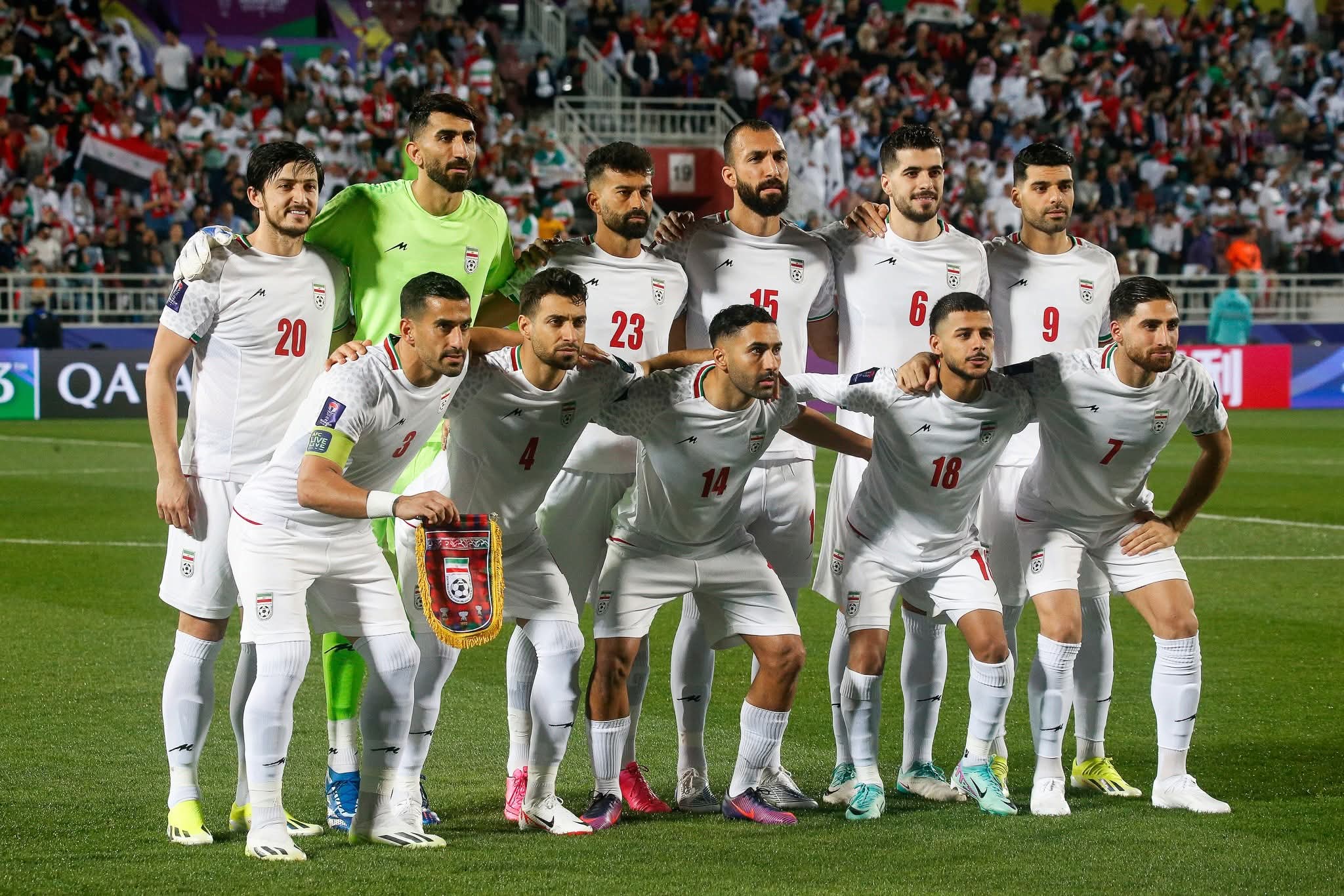
For most nations, the FIFA World Cup is about hope, pride and escape.For Iran, it has become something heavier.
When Iran step onto the pitch against New Zealand in Los Angeles, they will not simply be carrying the expectations of millions of football fans. They will also carry the burden of war, political division, exile, protest and the impossible task of representing a fractured nation before the world.
Rarely has a team arrived at a World Cup under such suffocating political tension.
Only days before the tournament, Iran and the United States, one of the host nations, stood dangerously close to a wider regional conflict.
Although an agreement to halt hostilities and reopen the Strait of Hormuz eased fears of escalation, the scars of those tensions remain deeply visible around the squad.
Even before landing in America, Iran’s World Cup journey had already become chaotic.
Visa concerns, security fears and rising political hostility forced the team to abandon plans to camp in Arizona, relocating instead to the Mexican border city of Tijuana.
Their eventual arrival in Los Angeles came later than expected, leaving little time to settle before the opening match.
For head coach Amir Ghalenoei, the disruption has gone far beyond logistics.
“Football is supposed to unite cultures and nations,” he said. “But these conditions affect focus and preparation.”
His words reflected the uncomfortable reality surrounding Iran’s campaign — one where football constantly feels secondary.
Inside the squad, players are attempting to shield themselves from the storm outside. But that storm is impossible to ignore.
Striker Mehdi Taremi admitted the emotional weight became obvious from the moment the team arrived.
“This kind of tension undermines the joy of the World Cup,” he said.
That tension will be impossible to escape in Los Angeles, home to one of the world’s largest Iranian diaspora communities — often nicknamed “Tehrangeles.”
Thousands of Iranian-Americans are expected at SoFi Stadium, but many will not come merely as supporters.
Some are preparing demonstrations against the Iranian regime, accusing authorities back home of politicising sport and using athletes as symbols of state power.
The controversy surrounding FIFA’s reported restriction on the pre-revolutionary Lion and Sun flag has only deepened emotions among exiled Iranians, many of whom see the symbol as part of an identity erased after the 1979 revolution.
Outside the stadium, protests, chants and political messages are expected to dominate the atmosphere long before kick-off.
Inside it, Iran’s players will attempt to focus on football while knowing every movement, every anthem and every reaction will be politically interpreted.
That is the impossible position facing this team.
To some supporters inside Iran, they are national heroes carrying the hopes of a proud football nation desperate for joy.
To critics abroad, they are unwilling representatives of a regime many deeply oppose.
“There is no winning for Iran’s team,” investigative football journalist Samindra Kunti observed. “Everything becomes political.”
And perhaps that is the tragedy of Iran’s World Cup story.
Football is supposed to offer release — ninety minutes where politics, borders and conflict temporarily disappear.
Yet for Iran, the game has become inseparable from the realities surrounding it.
Before a single ball has truly defined their tournament, Iran already find themselves playing one of the most emotionally and politically charged matches of the entire World Cup.