

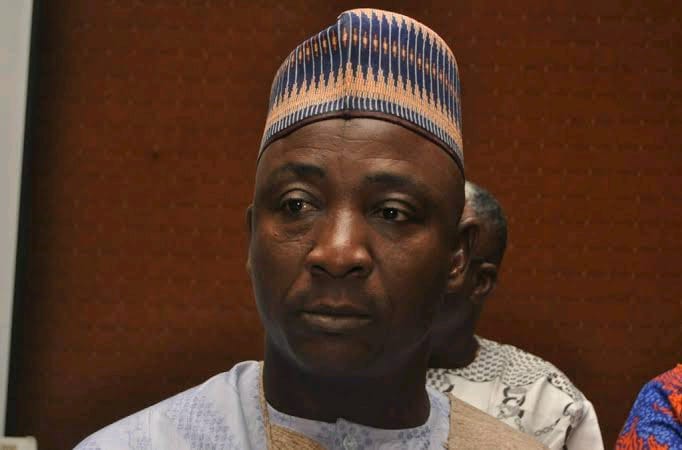
The Super Falcons’ WAFCON elimination has triggered a fresh crisis, with Nigerians demanding accountability from NFF president Ibrahim Gusau online.
Nigeria’s failure to reach the 2027 FIFA Women’s World Cup in Brazil has now intensified scrutiny around the country’s football administration.
The disappointment has spilled across social media, where supporters, journalists, former players and football stakeholders continue debating responsibility for the setback.
One side insists Gusau should resign, arguing that repeated national-team disappointments demonstrate serious leadership failures within the Nigeria Football Federation.
That position has gained support from prominent football voices, including critics who previously demanded an overhaul of the Gusau-led NFF board.
The argument centres on Nigeria’s broader decline, including consecutive failures to qualify for the men’s World Cup and struggles across several national-team categories.
Critics therefore see the Super Falcons’ latest disappointment as another indication that Nigeria needs fundamental changes within its football administration.
However, another powerful argument rejects placing the entire responsibility on Gusau, insisting players and technical officials must accept their share.
Ahmed Shuaibu Gara-Gombe recently argued that removing Gusau alone would not automatically solve Nigeria’s football problems or guarantee future qualification.
Supporters of the NFF president also point to coaching programmes, infrastructure projects and administrative reforms introduced during his tenure as evidence.
They argue that football results should not provide the only measurement for evaluating an administration responsible for a much larger ecosystem.
Yet the opposing camp insists that Nigeria’s repeated failures make accountability unavoidable, especially when expectations remain extremely high among supporters.
The debate therefore appears evenly divided online, although the Gusau-must-go campaign currently enjoys stronger momentum across sections of Nigeria’s football media.
That momentum has also gained strength because the NFF is approaching an elective congress where stakeholders can challenge the current leadership constitutionally.
The Super Falcons’ failure makes the situation more complicated because the WAFCON doubled as Africa’s qualification route for Brazil 2027.
Nigeria’s elimination means the country has lost an opportunity to extend its remarkable record of appearances at the Women’s World Cup.
The National Sports Commission should therefore resist becoming another spectator and demand a comprehensive review of women’s football structures.
Such intervention should examine preparation, coaching appointments, player welfare, federation accountability, grassroots development and the effectiveness of national-team planning.
The immediate priority should not simply be removing individuals, but identifying failures and establishing measurable reforms that can restore Nigerian women’s football.
For now, however, the louder public message remains clear: Nigerians want answers, accountability and a credible plan before another major tournament arrives.


