

Super Falcons’ WAFCON Failure Amplifies ‘Gusau Must Go’ Calls, Urgent Need to Rescue Nigerian Football
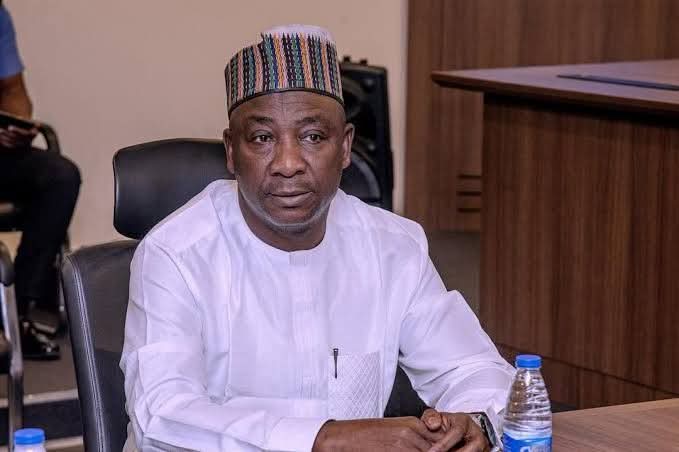
Nigeria’s latest Super Falcons setback has intensified calls for NFF President Ibrahim Gusau to leave office, as concerns grow that the country’s football crisis has gone beyond the performance of individual teams and now demands urgent intervention.
The Super Falcons’ failure to secure a place in the 2027 FIFA Women’s World Cup play-offs has added another troubling chapter to a period of inconsistency across Nigeria’s national teams under the Gusau-led NFF board.
The setback is particularly painful because the Falcons remain one of Nigeria’s most successful sporting teams.
They won the 2025 Women’s Africa Cup of Nations and have dominated African women’s football for decades.
Yet their latest collapse has raised serious questions about the direction of women’s football and the broader management of the national teams under the current administration.
The Falcons suffered their lowest-ever finish in the history of the competition and, for the first time, failed to qualify for the FIFA Women’s World Cup.
That failure, alongside the Super Eagles’ inability to qualify for the 2026 FIFA World Cup, represents arguably the biggest embarrassment of the Gusau administration.
The NFF eventually apologised to Nigerians, acknowledging the seriousness of the situation.
But the failures have been accompanied by recurring concerns over coaching uncertainty, inadequate preparation, unpaid obligations and poor coordination around crucial international assignments.
And the problems are not limited to the senior teams.
At youth level, the decline is equally disturbing.
The Golden Eaglets, five-time FIFA U-17 World Cup champions, have missed the U-17 AFCON and its World Cup pathway in three consecutive editions.
The appointment of a new coach barely three months before the crucial WAFU B U-17 Championship only heightened concerns about the lack of long-term planning.
Such a decline points to deeper problems within Nigeria’s once-respected youth development structure.
The Flying Eagles present an equally troubling picture.
After reaching the quarter-finals of the last FIFA U-20 World Cup, Nigeria’s U-20 side has suffered a significant decline.
The Flying Eagles surrendered the WAFU B U-20 title they won last year and failed to qualify for the CAF U-20 AFCON, consequently missing out on the 2027 FIFA U-20 World Cup.
Taken together, these setbacks suggest that Nigeria’s football problems can no longer be dismissed as isolated failures of coaches or players.
The bigger issue is governance.
Questions surrounding the credibility of NFF elections have persisted, with allegations of political interference, inducements and delegate manipulation associated with the 2022 process.
Those concerns make the forthcoming NFF election on September 27, 2026, particularly important.
For Nigerian football, it must not become another contest for positions at the Glass House.
It should be an opportunity to reset the system.
The Presidency and other relevant authorities must demand greater accountability, transparency and professionalism in football administration.
NFF elections must be credible, while administrators should be judged on competence, performance and integrity rather than political connections or loyalty.
The growing “Gusau Must Go” sentiment, therefore, represents more than opposition to one individual.
Gusau may ultimately have to answer for the failures recorded under his watch.
If the scale of those failures is considered sufficient to warrant his resignation, or if delegates decide not to return him for another term, that decision must be respected as part of accountability.
But replacing the NFF president alone will not solve Nigeria’s football crisis.
What Nigeria needs is a comprehensive restructuring of football administration; stronger youth development pathways; better planning and preparation for national teams; financial accountability; and a professional system capable of protecting and developing the country’s enormous football talent.
The warning signs are already too loud to ignore.
If Gusau must go, then let accountability take its course.
But the system that keeps reproducing failure must also go with him.
Nigeria must break away from the model that has continued to produce recurring crises over the past decade. The answer cannot simply be the election of new individuals into old structures.
What is required is a monumental system change that places competence, accountability, transparency and long-term development at the heart of Nigerian football.
The country cannot afford to lose another generation of talent while waiting for its football to find direction.
Something must give.
And this time, Nigeria needs more than a change of faces. It needs a change of system.


