FIFA’s $40m Offer to Member Nations Sparks Global Backlash: Why UEFA and Others Are Fighting Infantino’s World Cup Plan
FIFA’s proposal to pay member associations $40 million to support its World Cup commercial restructuring has triggered fierce opposition from UEFA and other football stakeholders. Here’s everything you need to know.
World football has been thrown into one of its biggest governance controversies in recent years after FIFA offered each of its 211 member associations up to $40 million (about £30 million) in exchange for backing a controversial commercial restructuring plan.
The proposal, championed by FIFA president Gianni Infantino, has drawn fierce criticism from UEFA, football leagues, players’ unions and several national associations, with some describing it as an attempt to “sell the World Cup.”
So, what exactly is happening, and why has it become such a major issue?
What Is FIFA Proposing?
FIFA wants to create a new commercial company that will manage the commercial rights to its biggest competitions, including the FIFA World Cup.
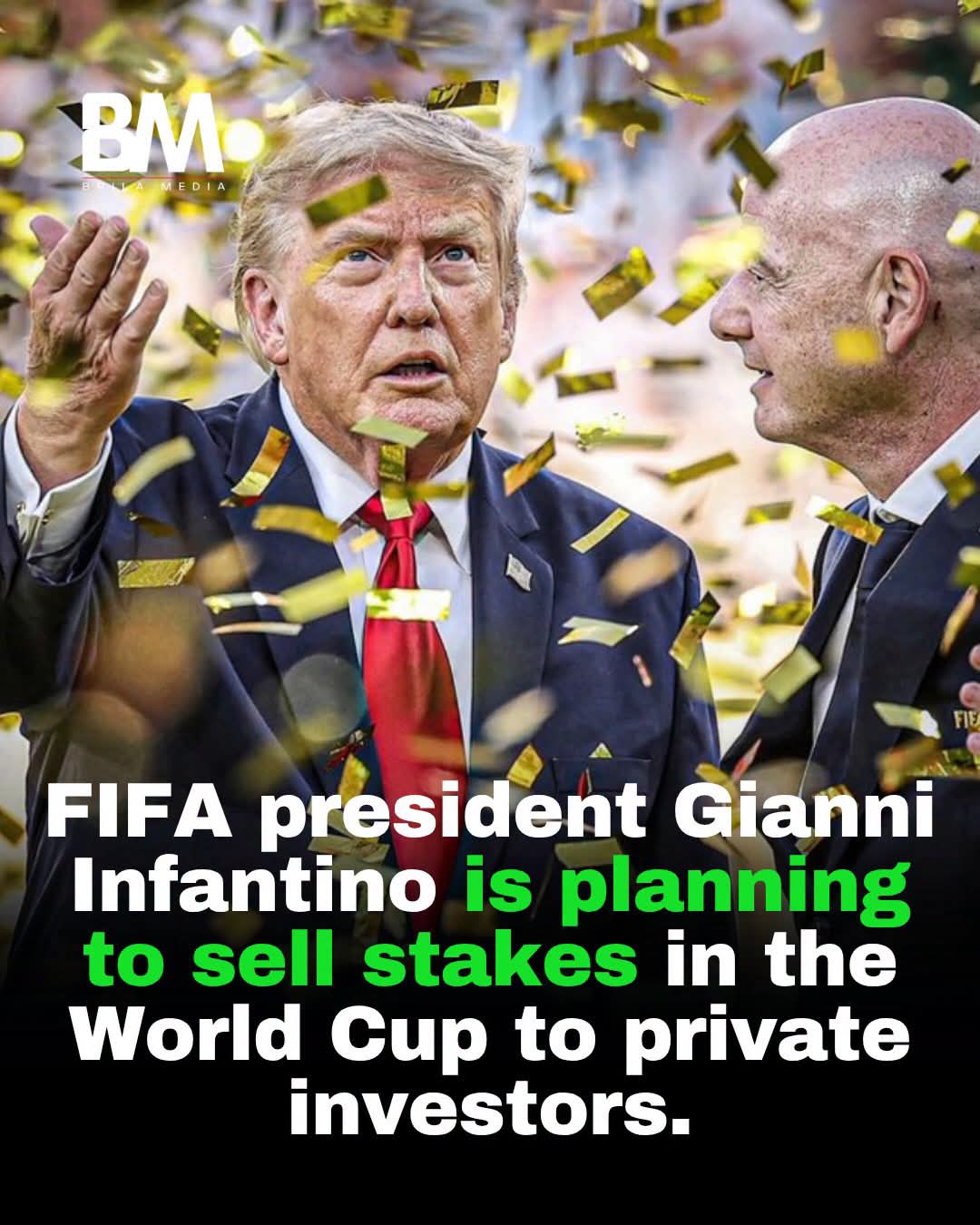
Rather than FIFA owning these rights entirely, the governing body intends to sell a minority stake in the business to private investors.
Reports suggest the deal could generate around $10 billion, making it one of the biggest commercial transactions in sports history.
According to FIFA, the move will unlock fresh investment and generate more revenue to develop football worldwide.
Why Is FIFA Offering Member Associations $40 Million?
To secure support for the proposal, FIFA has promised each of its 211 member associations up to $40 million.
Associations that approve the proposal before September 19 would immediately become eligible for the first $20 million, with the remaining amount expected later under the agreed framework.
For many smaller football federations, this represents several years’ worth of development funding, making the offer highly attractive.
Infantino insists the payment is “an opportunity, not an obligation”, arguing that the extra income would help build football infrastructure, improve youth development, strengthen women’s football and enhance national teams.
Why Are UEFA and Others Opposing It?
UEFA believes the issue is not simply about money but about governance and transparency.
European football’s governing body argues that FIFA developed the proposal behind closed doors without consulting key stakeholders, including confederations, leagues, clubs and national associations.
In a strongly worded statement, UEFA accused FIFA of trying to pressure associations into supporting the proposal by attaching financial incentives.
UEFA said:
“FIFA cannot continue to use our sport to enrich themselves and their friends.”
The organisation has also scheduled an emergency meeting involving all 55 European member associations to discuss a coordinated response.
Is FIFA Selling the World Cup?
Not exactly.
FIFA insists it is not selling ownership of the World Cup itself.
Instead, it wants investors to purchase a minority stake in the commercial company responsible for generating revenue from the World Cup and other FIFA competitions.
FIFA says investors would have no influence over sporting decisions, tournament formats or governance.
Critics, however, fear that private investment will inevitably prioritise profits over football traditions and could influence future commercial decisions.
Why Is This Such a Big Deal?
Many football stakeholders believe the proposal could fundamentally change how the global game is governed.
Opponents fear that once private investors become involved, commercial returns could become the priority, potentially leading to:
More expansion of FIFA competitions.
Increased pressure on the already congested football calendar.
Reduced influence for national associations, clubs and confederations.
Greater commercialisation of football’s biggest tournaments.
Some observers have compared the controversy to the failed European Super League project of 2021.
Who Else Has Criticised FIFA?
UEFA is not alone.
Several major football organisations have voiced concern, including:
Concacaf
The Asian Football Confederation (AFC)
FIFPRO (the global players’ union)
European Leagues
La Liga president Javier Tebas
The Football Association (England)
The German Football Association (DFB)
The French Football Federation
Former FIFA president Sepp Blatter also criticised the proposal, saying football should not be treated as a financial asset.
Is Everyone Against the Proposal?
No.
Some football administrators believe the plan could significantly benefit smaller nations.
Czech Football Association president David Trunda publicly stated that he could see “pragmatic benefits” for Czech football, although he acknowledged more details are needed before making a final decision.
Many African, Asian and Caribbean football associations could also find the financial package difficult to reject given the potential impact on grassroots development. Infact feelers from CAF indicated majority of the members are for it while the body will come up with a statement of for or against the move after Thursday, 30th July 2026 meeting
Could UEFA Boycott the World Cup?
At this stage, a boycott remains unlikely.
However, reports suggest UEFA’s emergency meeting could discuss every possible response, including stronger measures if FIFA refuses to amend its proposal.
Such a move would dramatically affect the commercial value and sporting quality of the World Cup, as Europe provides many of the tournament’s strongest teams.
What Happens Next?
FIFA has set September 19 as the deadline for member associations to decide whether they support the proposal and qualify for the initial funding.
Before then, football’s major stakeholders are expected to hold further discussions, with UEFA leading opposition efforts while FIFA continues lobbying federations around the world.
The outcome could reshape football’s financial and governance structure for decades to come.
The Bottom Line
At the heart of the dispute is a fundamental question:
Should football’s biggest competitions remain fully under FIFA’s control, or should private investment play a role in their commercial future?
FIFA argues the proposal will generate billions of dollars that can accelerate football development across the globe.
UEFA and several leading football bodies counter that the process lacks transparency and risks placing commercial interests above the long-term health of the sport.
With billions of dollars at stake and growing divisions across world football, the coming weeks could prove to be among the most significant in FIFA’s modern history.
Written by Olusola Adebayo, a sport journalist based in Lagos