


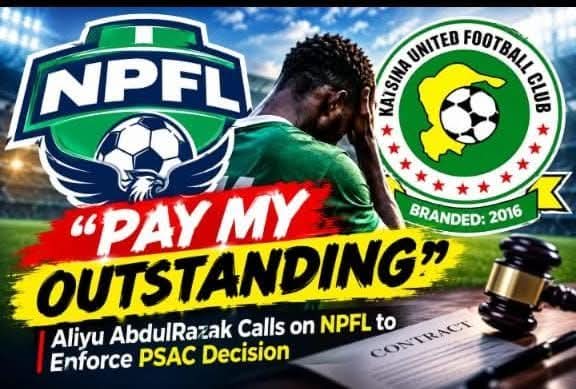
NPFL Players Groan as PSAC Sits Idle for 10 Months, NANPF Takes NFF Dispute to FIFA
Players and coaches with unresolved contractual disputes are demanding urgent action over the prolonged inactivity of the Players’ Status and Arbitration Committee (PSAC), as the Nigeria National Association of Professional Footballers (NANPF) escalates concerns about the situation to FIFA and the Confederation of African Football (CAF).
Uncertainty surrounding the future of the Players’ Status and Arbitration Committee (PSAC) of the Nigeria Football Federation (NFF) has intensified concerns among Nigerian professional footballers and coaches, with unresolved contractual disputes leaving affected parties waiting for a clear path to justice.
The committee, established to handle disputes involving players, coaches and clubs, has reportedly not held a sitting since December 2025, raising questions about its operational status amid the administrative changes and reform process within the NFF.
The prolonged inactivity has left players and coaches concerned about outstanding claims, unpaid entitlements and contractual disagreements that require a recognised dispute-resolution mechanism.
The situation has also prompted the Nigeria National Association of Professional Footballers (NANPF) to escalate its concerns to FIFA, with the union reportedly submitting a petition to the world football governing body’s Legal and Compliance Division in Zurich and copying the Confederation of African Football (CAF) in Cairo.
The development places renewed attention on the need for institutional continuity and effective dispute resolution as Nigerian football navigates changes within its governing body.
NFF Reforms Raise Questions Over PSAC’s Status
The uncertainty surrounding PSAC has emerged against the backdrop of the mass resignation of the NFF executive committee led by former president Ibrahim Gusau, as questions persist about the implications of the administrative transition for the committee’s operations.
Players and coaches are seeking clarification on whether PSAC remains constituted under the current arrangements, whether its membership or mandate has been affected, and when it will resume hearings.
Although institutional reforms may require administrative adjustments, stakeholders argue that pending contractual disputes must not be left unresolved indefinitely.
The continued scheduling of domestic league matches, international fixtures and continental competitions has further fuelled calls for clarity over why the mechanism responsible for addressing employment disputes has remained inactive.
For affected footballers, the issue goes beyond administrative procedure. Delays in resolving contractual disagreements can affect their finances, registration status and ability to secure new employment.
Players and Coaches Demand Urgent Intervention
Players familiar with the challenges surrounding unresolved contractual disputes have called on the NFF to provide a clear timetable for PSAC’s next sitting.
One player, who requested anonymity because of the sensitivity of his case, said administrative changes should not prevent footballers from seeking redress.
“We understand that there are changes taking place at the NFF, but players should not be made to suffer because of an administrative transition. Our contracts and careers cannot be put on hold indefinitely. We need to know when the committee will sit and what happens to cases already submitted,” the player said.
Another player expressed concern about the financial implications of prolonged delays, particularly for professionals waiting for outstanding payments or decisions on contractual disagreements.
“When a contractual dispute remains unresolved, it affects more than the player involved. It can affect his family, his next club and his ability to plan his career. We need clear communication from the NFF on the status of PSAC and when outstanding cases will be heard,” he said.
A third player called for transparency, urging the federation to communicate the committee’s status and provide guidance for footballers whose cases remain pending.
“If the committee still exists, the federation should tell us when it will resume. If there are new arrangements, players should be informed about how to proceed with their cases. We cannot continue waiting without knowing what is happening,” he said.
A coach with an unresolved contractual issue also stressed the importance of maintaining an accessible mechanism for settling disputes between clubs and their employees.
“Clubs and coaches must be able to resolve contractual disagreements through an established process. When cases remain pending for months without a clear date for a hearing, it creates uncertainty for everyone involved. We need the NFF to provide clarity and ensure that the process continues without unnecessary delays,” the coach said.
The four accounts reflect the concerns that affected stakeholders want addressed, although their identities and specific cases would need to be independently verified.
NANPF Takes Concerns to FIFA, CAF
The reported petition by NANPF to FIFA represents an escalation of the concerns surrounding PSAC beyond the domestic football administration.
By approaching FIFA’s Legal and Compliance Division and copying CAF, the association is seeking international attention to the alleged breakdown in the domestic dispute-resolution process.
The central issue is whether the NFF has maintained an accessible and effective mechanism through which players and coaches can pursue contractual claims during its administrative transition.
The union’s reported appeal is understood to focus on institutional accountability rather than asking FIFA to determine the merits of individual contractual disputes.
Among the issues requiring clarification are the reasons for the committee’s prolonged inactivity, the status of pending cases and the arrangements for restoring hearings.
The petition also raises the broader question of how football authorities can pursue institutional reforms without leaving players and coaches without an effective route to seek redress.
The precise contents of the petition, its date of submission and any formal response from FIFA or CAF should be confirmed from the association or the relevant governing bodies.
Unpaid Wages, Registration Disputes Heighten Concerns
The consequences of delayed dispute resolution can extend well beyond the committee’s administrative calendar.
Players awaiting decisions on unpaid salaries, contractual breaches or other financial claims may face mounting economic pressure while attempting to establish their rights.
Others involved in registration or transfer disagreements may experience uncertainty over their eligibility to join new clubs, depending on the nature of their cases and the applicable regulations.
Coaches can also face prolonged uncertainty over contractual entitlements and disputes with their employers.
For professionals whose careers depend on short playing contracts and transfer windows, delays can have consequences that are difficult to reverse, particularly when opportunities to secure new employment are limited.
These concerns have strengthened calls for the NFF to clarify the committee’s status and communicate how pending cases will be handled.
However, the individual circumstances of affected players and coaches vary, and the extent of the reported backlog and financial losses requires independent confirmation.
Ikpeme Under Pressure to Clarify Committee’s Future
Attention has also turned to the NFF’s Interim Secretary, Ikpeme, whom stakeholders want to provide clarity on PSAC’s status and convene its next sitting as soon as possible.
Players and coaches are seeking an official statement explaining whether the committee remains operational, whether any changes have been made to its membership and when hearings are expected to resume.
They also want assurances that cases already submitted will be preserved and processed under the applicable regulations.
A clear timetable would help affected parties understand the next steps available to them and reduce uncertainty over the handling of contractual disputes.
Beyond convening a meeting, stakeholders expect the federation to provide an explanation for the prolonged inactivity and establish a reliable process for communicating future hearing dates and decisions.
A Test of Football Governance
The PSAC controversy highlights the importance of protecting institutional continuity during periods of administrative change.
While the NFF may have legitimate reasons to review its structures and procedures, such changes must be accompanied by clear arrangements for handling existing responsibilities, particularly those affecting employment rights and contractual obligations.
The reported petition to FIFA and CAF adds an international dimension to the dispute, with attention now focused on whether the concerns will prompt a response from the governing bodies.
For NANPF, the immediate priority is to secure clarity and an effective dispute-resolution process for its members. For players and coaches, the pressing concern is the opportunity to have their cases heard without further avoidable delays.
With PSAC’s last reported sitting dating back to December 2025, the NFF faces growing calls to explain the committee’s status and provide a definite resumption plan.
Until that happens, uncertainty will continue to hang over affected professionals awaiting decisions that could determine their financial security, contractual freedom and future careers.