

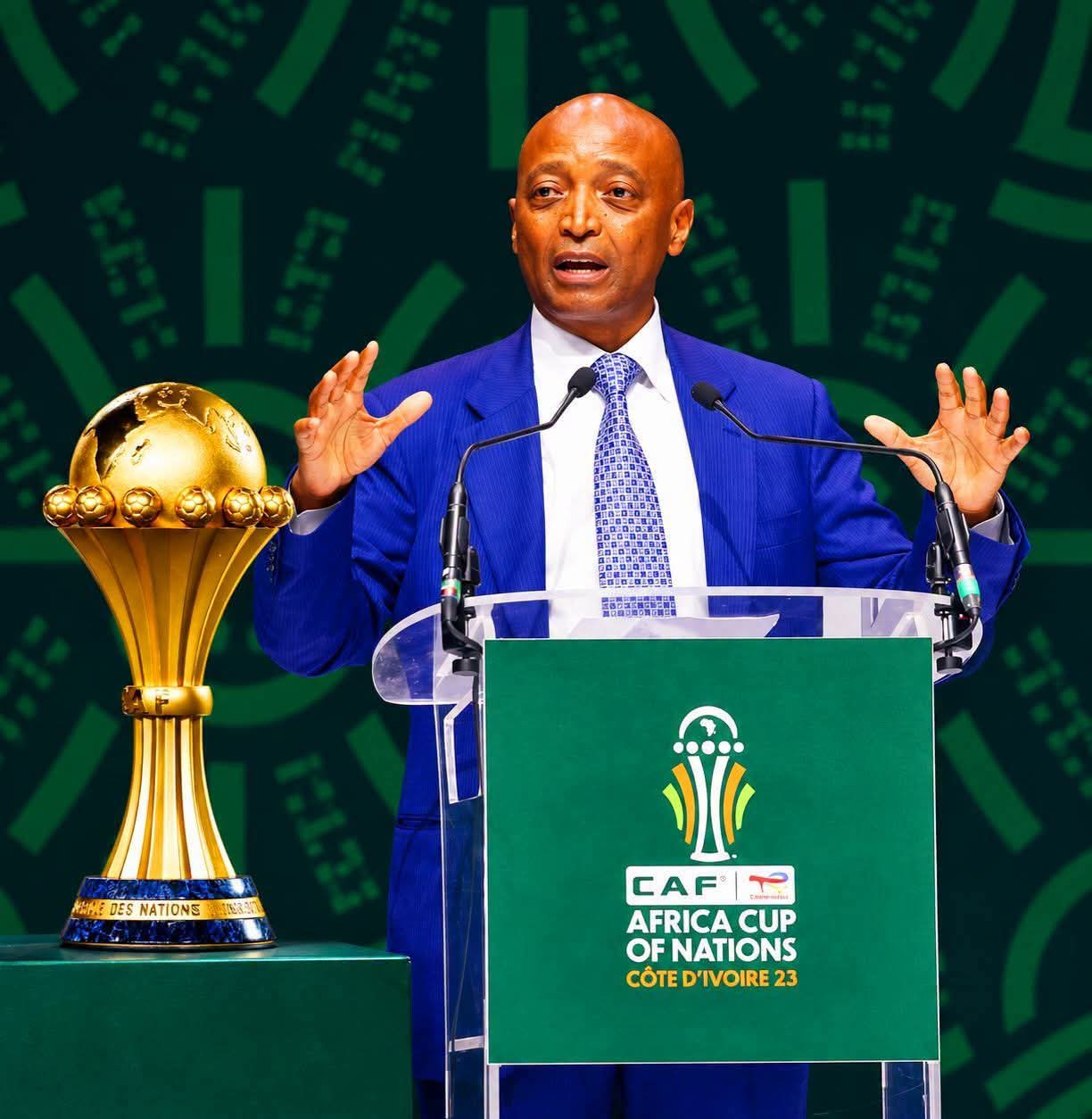
Motsepe Reopens AFCON Two-Year Cycle Debate After CAF Reviews Competition Format
CAF President Patrice Motsepe has confirmed that the governing body is considering a return to the Africa Cup of Nations being staged every two years, months after announcing plans to switch the continental championship to a four-year cycle.
Motsepe made the disclosure on Friday, October 9, 2026, while addressing the CAF Strategy Conference in Santa Maria, Sal Island, Cape Verde, where African football administrators and other stakeholders gathered to discuss the future development of the game.
Speaking about the tournament’s schedule, the CAF president said the organisation had revisited the issue during discussions over the preceding days.
“I can guarantee you. We’ve discussed it over the last few days to say we are looking at everything, including having the AFCON coming back every two years,” Motsepe said.
His remarks signal a possible reconsideration of one of the most significant changes to African football’s international competition calendar in recent years.
However, CAF has not yet announced a formal decision to abandon the four-year format, leaving the future frequency of the tournament subject to further discussions.
CAF’s AFCON Calendar Reversal Under Review
In December 2025, Motsepe announced that AFCON would move from its traditional two-year schedule to a four-year cycle after the 2028 edition.
Under the original plan, the 2027 tournament, to be co-hosted by Kenya, Tanzania and Uganda, would be followed by a further edition in 2028. Subsequent tournaments would then take place every four years, beginning in 2032.
The restructuring also included plans to introduce an annual African Nations League from 2029, providing regular senior international competition during the years without AFCON.
CAF presented the changes as part of a broader effort to improve the organisation of its competitions, align the African football calendar more closely with the international schedule and establish more sustainable revenue streams.
The proposed switch, however, represented a significant departure from the format that has defined the continent’s flagship national-team competition for decades.
Motsepe’s latest comments suggest that CAF is now reassessing the balance between its wider calendar objectives and the importance of maintaining AFCON’s traditional frequency.
Commercial Considerations and African Football’s Interests
The debate over AFCON’s frequency extends beyond scheduling and into the tournament’s commercial value, revenue generation and importance to African football associations.
AFCON has historically been a major source of income for CAF, with revenue from broadcasting, sponsorship and commercial partnerships helping to support the governing body and its member associations.
A return to a two-year cycle would provide more frequent editions of the continent’s flagship tournament, potentially creating additional commercial opportunities while preserving a competition that carries considerable sporting and cultural significance across Africa.
Conversely, the four-year format was intended to create greater scheduling stability and make room for the proposed African Nations League, which CAF envisaged as a regular source of competition and revenue.
Any reversal would therefore require CAF to consider how a biennial AFCON could fit alongside its other competitions and the international football calendar.
The decision would also have implications for national teams, players, clubs, broadcasters, sponsors and host countries.
Motsepe Defends CAF’s Independence
During the strategy conference, Motsepe also defended CAF’s responsibility to make decisions in the interests of African football, rejecting suggestions that the confederation’s policies were dictated by European football authorities.
He stressed that CAF’s primary obligation was to protect, promote and advance the interests of the continent while maintaining constructive relationships with international football stakeholders.
The comments reflect the wider challenge facing African football administrators as they seek to improve the continent’s competitiveness, strengthen its financial position and coordinate the demands of domestic leagues, national teams and international competitions.
What Happens Next?
Motsepe’s statement has reopened the debate over AFCON’s future, but the immediate question is whether CAF will translate the review into a formal policy change.
No revised tournament calendar or implementation timetable was announced alongside his remarks.
Until CAF communicates a definitive decision, the previously announced four-year structure and the proposed African Nations League remain the background against which any potential change must be assessed.
For now, the possibility of restoring AFCON to a biennial competition is back on the table, potentially reshaping the future of African international football once again.


