

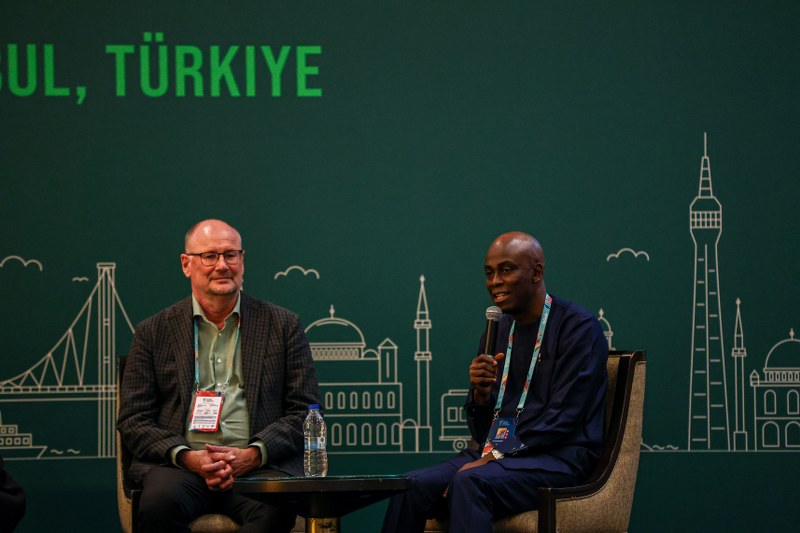
Nigeria Table Tennis Federation (NTTF) President Tayo Adesoji has identified stronger development structures, improved funding, international exposure and sustained partnerships as critical to accelerating the progress of young table tennis players from grassroots participation to the professional level.
Adesoji made the submission during a panel discussion on African talent development at the two-day International Table Tennis Federation (ITTF) Youth Summit, held alongside the World Youth Championships in Istanbul, Türkiye.
The discussion brought together Adesoji and ITTF Africa media representative Latifat Ohiosumuan, with ITTF Group Sports Director Mikael Andersson and Head of Development Projects Katarzyna Kubas leading conversations on Africa’s emerging talents, challenges facing national associations and strategies for improving the continent’s international competitiveness.
Speaking on Nigeria’s development priorities, Adesoji said the federation was working with government institutions and corporate organisations to strengthen the country’s table tennis structure and create better opportunities for emerging players.
“We are working tirelessly with the government and corporate bodies to achieve better results and help our young talents progress to the professional level. To reach that stage, stronger structures, improved funding, and continued partnerships with the ITTF are essential. International exposure is also important because it helps improve the mentality of our players and increases their chances of reaching podium level,” he said.
The NTTF president acknowledged the ITTF’s contributions to Nigeria’s development, particularly through capacity-building programmes for coaches, umpires and competition managers, alongside training opportunities for players.
However, he stressed that sustained investment and stronger institutional collaboration would be necessary to translate these initiatives into consistent international success.
The summit also provided an opportunity for African representatives to examine broader challenges affecting the development of table tennis across the continent, with delegates from Egypt, Nigeria, Sudan, Côte d’Ivoire and Burkina Faso participating.
Bringing the media perspective to the discussion, Ohiosumuan highlighted the importance of digital storytelling and content creation in expanding the sport’s visibility and attracting younger audiences.
She explained how player features, match highlights, livestreaming and social media platforms could strengthen fan engagement, introduce table tennis to new audiences and create greater opportunities for the sport across Nigeria and Africa.
Beyond the panel discussions, ITTF President Petra Sörling announced plans to establish a dedicated Member Association Department and strengthen the federation’s schools programme as part of efforts to improve support for national associations.
The new department, to be led by Thiago Viegas, will work directly with Member Associations to identify their individual needs, establish development priorities and implement programmes tailored to their specific challenges.
Viegas explained that the approach would place national associations at the centre of the development process, ensuring that their input shapes the initiatives designed to support sustainable growth.
The ITTF School Programme was another major focus, with the federation outlining plans to provide a more structured framework for countries seeking to integrate table tennis into grassroots and school-based sporting activities.
The Romanian Table Tennis Federation also shared its development model, highlighting strategies that have contributed to its progress, particularly in youth and women’s table tennis.
In a practical demonstration of its commitment, the ITTF and Turkish Table Tennis Federation concluded the summit by launching a partnership to support the ITTF School Programme and expand opportunities for young people through the sport.
For African table tennis, the discussions reinforced the need to combine grassroots investment, stronger technical structures, improved facilities and international exposure with effective media and promotional strategies.
Adesoji’s contribution placed particular emphasis on the importance of building a sustainable pathway that allows young Nigerian players to progress beyond domestic competitions and compete consistently for international honours.


