


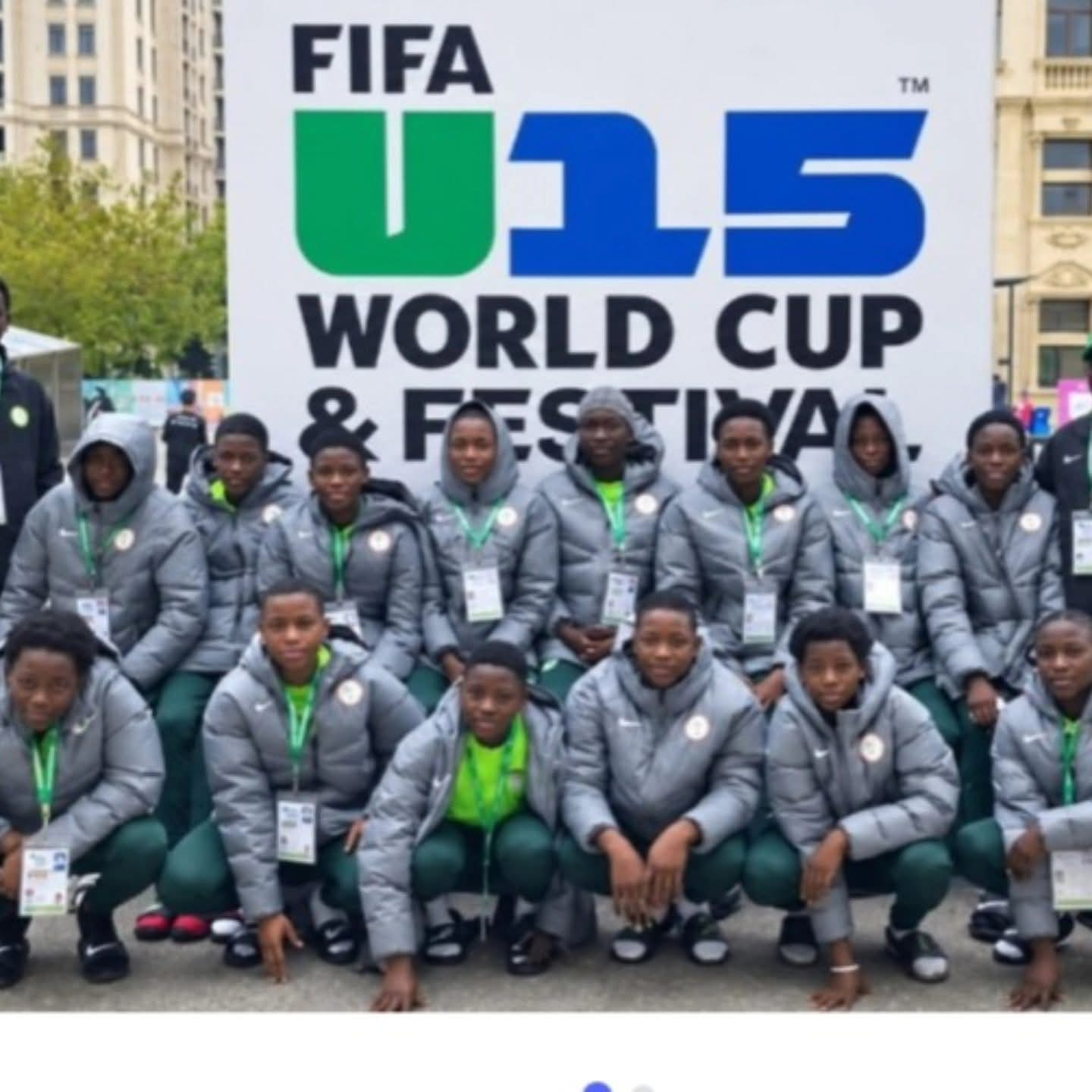
FIFA U-15 World Cup: Lasora Questions Nigeria’s Selection Process After 76th Finish, Points Way Forward
Bello-Lasoro Abubakar Ola, a grassroots football advocate and alumnus of Alumni Olympic ASMC, has questioned the talent identification and selection process behind Nigeria’s participation at the inaugural FIFA U-15 World Cup and Football Festival in Azerbaijan.
He argued that the country’s 76th-place finish does not reflect its enormous football potential.
Nigeria’s disappointing position in the final standings of the maiden competition, won by Spain, has renewed questions about the country’s approach to youth football development, particularly the processes through which young players are identified, selected and prepared for international competitions.
The Future Eagles’ participation offered an opportunity to assess Nigeria’s emerging football talents against their counterparts from other countries.
However, the outcome has also brought the effectiveness of the country’s grassroots development structure and youth recruitment system into sharper focus.
Reacting to the development in an interview with Sportsbeat.ng, Lasoro, whose involvement in grassroots football includes more than two decades of experience Lasora, maintained that the squad that represented Nigeria was not necessarily a true reflection of the country’s available U-15 talent pool.
He questioned the transparency of the selection process, insisting that national youth teams should emerge from a properly organised and competitive talent identification system rather than a limited selection arrangement.
“This is not a real representation of our football potential.
“Last time someone posted here about their participation, I asked, ‘How are the boys selected?’ They are not a true representation of Nigeria U-15,” he said.
Lasoro argued that Nigeria possesses an extensive pool of young footballers whose abilities could be better identified through a structured national recruitment framework involving grassroots competitions across the country’s 774 local government areas.
He proposed a progression system beginning at the local government level, moving through state and regional competitions before culminating in a national selection process.
“All we ask for is transparency, accountability and support. Imagine if these boys were selected through a national U-15 system, with a structure starting from the 774 local government areas, progressing through the states, regional competitions and finally the national level,” he said.
He estimated that more than 10 million children between the ages of 12 and 15 participate in football across Nigeria, arguing that the challenge is not necessarily a shortage of talent but the absence of a coordinated mechanism to discover, develop and expose promising players.
Beyond the immediate concerns surrounding the Azerbaijan tournament, Lasoro called for a comprehensive football development strategy targeting players between the ages of 12 and 17.

He stressed that youth football development must be treated as a continuous process, with clearly defined stages of talent identification, coaching, competitive exposure and transition into higher age-grade categories.
According to him, a sustainable development framework would provide a more reliable foundation for national youth teams and prevent the country from relying on short-term arrangements designed primarily to fulfil participation requirements at international tournaments.
“One way forward is a structural, strategic football development plan from 12 to 17 years. We need a long-term plan with meaningful transitional stages, not a short-term plan just for participation,” he added.
The grassroots football advocate also expressed concern over Nigeria’s position relative to other African countries in the final standings, particularly Ghana and Guinea, whose performances he believes should prompt a serious reassessment of Nigeria’s youth football development model.
“I cannot imagine Ghana, Guinea and other African countries leading us in rankings from 16th to 76th,” he lamented.
For Lasoro, the disappointment of Azerbaijan should serve as a catalyst for a broader conversation about the country’s football development priorities, particularly the relationship between grassroots competitions, talent identification and national team selection.
His intervention reinforces a recurring challenge in Nigerian football: converting the country’s vast participation base into a properly organised talent development pipeline capable of producing competitive national teams.
With Nigeria’s youth football ambitions extending beyond occasional appearances at international tournaments, the need for a transparent, inclusive and sustainable development structure remains central to building a stronger foundation for the country’s future.