
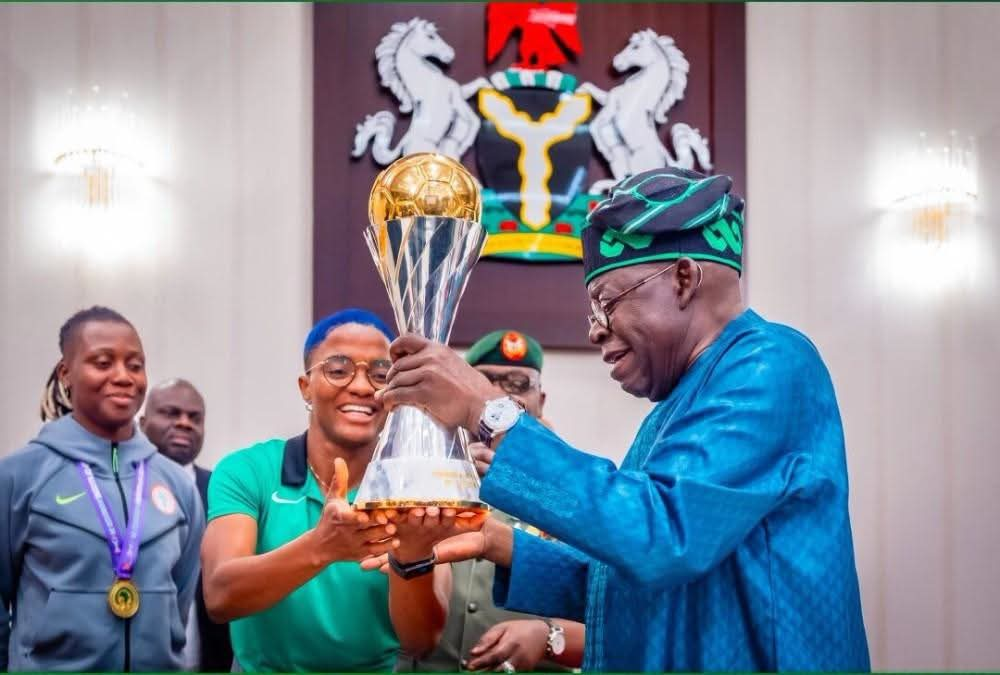
Nigeria’s decision to reward the Super Falcons with $100,000 each following their historic triumph at the 2024 Women’s Africa Cup of Nations (WAFCON) is a welcome demonstration of the country’s willingness to recognise sporting excellence.
However, beyond the celebrations and financial incentives, the development presents an important opportunity for the Federal Government to establish a transparent, sustainable and inclusive reward system for athletes across all sporting disciplines.
The Super Falcons deserved every bit of the recognition that followed their remarkable comeback victory over hosts Morocco in the WAFCON final.
Trailing by two goals, the Nigerian women produced an impressive fightback to win 3-2, reclaim the continental title and extend their record to 10 African championships.
Their achievement was not just another football victory. It was a demonstration of resilience, commitment and the determination to defend Nigeria’s sporting reputation on the continent.
The subsequent presidential recognition, national honours and financial rewards sent a strong message that the country was prepared to celebrate athletes who delivered success on the international stage.
The $100,000 reward for each player, alongside recognition for members of the technical crew, was particularly significant. It reinforced the importance of appreciating athletes whose sacrifices and performances bring national pride.
The Federal Government and the National Sports Commission (NSC), under Chairman Shehu Dikko and Director General Bukola Olopade, deserve commendation for the growing attention being given to athlete welfare and rewards.
However, an important question must now be asked: What happens to Nigerian athletes who achieve similar success in sports that do not enjoy the same visibility, commercial appeal or national following as football?
Does a world champion in scrabble, athletics, wrestling, weightlifting, swimming, boxing, table tennis or any other sporting discipline deserve less recognition because their achievements do not generate the same public excitement as a Super Falcons victory?
Certainly not.
The Super Falcons’ reward should therefore not be viewed in isolation. Rather, it should provide a foundation for a broader national conversation about how Nigeria recognises, rewards and motivates its sporting champions.
**The issue is not whether the Super Falcons deserve $100,000. They do. The bigger issue is whether other Nigerian athletes can expect a clearly defined and equitable reward structure when they achieve excellence for the country.**
Nigeria has consistently produced champions across different sporting disciplines, many of whom have delivered outstanding results at continental and global competitions without receiving corresponding national recognition.
The country’s scrabble community is a particularly striking example. Within the last 18 months, Nigerian players have secured multiple continental and world titles across junior and senior categories, further establishing the country’s reputation as a leading force in international scrabble.
These players have competed against the best in the world, won championships and flown the Nigerian flag with distinction. Yet, many of these achievements have not attracted the kind of government rewards and recognition that their sporting significance deserves.
Similar concerns exist across several less-publicised sports, where athletes often depend on personal resources, federation support and individual sacrifices to compete internationally.
This is where the NSC must move beyond occasional interventions and establish a comprehensive national sporting reward policy.
A structured system would eliminate uncertainty, promote fairness and give athletes a clear understanding of what they stand to receive when they win medals or championships for Nigeria.
Such a framework should establish clearly defined reward categories for different levels of international competition.
At the global level, world championship medallists should have specified financial incentives for gold, silver and bronze medals. Continental champions should also receive appropriate rewards, while junior and youth athletes who win African and global titles must not be excluded.
There should equally be a clearly communicated reward structure for Olympic and Commonwealth Games performances, as well as provisions for athletes competing in recognised team sports.
The policy must also recognise exceptional achievements beyond medals, including record-breaking performances and significant qualification milestones where appropriate.
Importantly, team rewards should be structured transparently to cover athletes and relevant technical personnel, with clear eligibility criteria to avoid disputes or inconsistencies.
Beyond determining reward amounts, the government must establish a reliable payment mechanism. Athletes should know what they are entitled to, the conditions for qualification and when approved rewards will be paid.
A national database of international sporting achievements, maintained in collaboration with recognised sports federations, would also help the NSC identify deserving athletes and ensure that no achievement goes unnoticed.
This is not about making every sporting achievement financially equal regardless of the competition involved. The level, significance and category of each competition can determine the reward. What matters is that the criteria are established in advance, applied consistently and communicated publicly.
The current leadership of the NSC has an opportunity to turn the renewed attention to athlete rewards into a lasting institutional reform.
Shehu Dikko and Bukola Olopade have repeatedly placed athlete welfare and the repositioning of Nigerian sports at the centre of their administration’s agenda. Establishing a national reward policy would provide a practical way to translate that commitment into a sustainable system.
Nigeria cannot continue to celebrate its athletes only when they return with trophies, medals and championships, without building a structure that consistently recognises their contributions.
The sacrifices behind these achievements are often enormous. Athletes spend years preparing for competitions, endure demanding training schedules and sometimes commit personal resources to pursue their ambitions. In several cases, they represent the country despite financial and logistical challenges.
When they succeed, national recognition should not depend on which sport they play or how much attention their achievements attract.
The Super Falcons have shown what determination and collective belief can achieve. Their $100,000 reward is a statement of appreciation that should inspire similar recognition across Nigerian sports.
Football must not become the exclusive beneficiary of government generosity. Athletics, wrestling, scrabble, swimming, basketball, weightlifting, boxing and other sports also have athletes who have made Nigeria proud.
Ultimately, rewarding sporting excellence is not merely about money. It is about fairness, motivation, national pride and creating an environment where every athlete knows that representing Nigeria and achieving success will be valued.
The Federal Government has an opportunity to build on the Super Falcons’ reward by working through the NSC to establish a national policy that covers all recognised sports and levels of international competition.
The message should be simple: every athlete who represents Nigeria and achieves sporting excellence deserves recognition, regardless of the discipline.
The Super Falcons have received their reward. Now is the time to ensure that the next Nigerian champion, whether from football or a less-publicised sport, does not have to depend on public pressure or individual intervention before receiving the country’s appreciation.
Nigeria must not only celebrate its champions; it must build a system that consistently rewards them. When athletes win for Nigeria, Nigeria must also win for its athletes.